Category: Treatment Guides

  • DBT Skills for Emotional Regulation β€” A Complete Guide

    Do you find yourself overwhelmed by emotions that seem too intense, too fast, or too difficult to control? Do you react to situations in ways you later regret β€” and then feel ashamed or confused about why you couldn’t just “stay calm”? If so, Dialectical Behaviour Therapy (DBT) may offer you some of the most practical and effective emotional skills available in modern psychology.

    DBT was developed in the late 1980s by American psychologist Dr. Marsha Linehan β€” herself a survivor of severe emotional dysregulation β€” and has become one of the most evidence-based treatments in mental health. While originally developed for Borderline Personality Disorder (BPD), its skills have been found effective for a wide range of people who struggle with emotional intensity, impulsivity, and interpersonal conflict.

    What Is DBT?

    Dialectical Behaviour Therapy is a form of cognitive-behavioural therapy with a significant emphasis on acceptance and mindfulness, drawn from Zen Buddhist practices. The word “dialectical” refers to the core tension at the heart of DBT: the simultaneous acceptance of yourself as you are right now, and the commitment to change. The therapist and patient hold both truths at once β€” “You are doing the best you can” AND “You can do better.”

    Standard DBT is delivered in four modes: individual therapy, skills training group, phone coaching (for real-time crisis support), and therapist consultation team. However, the DBT skills themselves β€” the practical techniques taught in the skills group β€” can be learned and applied by anyone, even outside of full DBT programmes.

    The Four Modules of DBT Skills

    Module 1: Mindfulness

    Mindfulness is the foundation of all DBT skills. In DBT, mindfulness means observing your experience β€” thoughts, emotions, sensations, urges β€” without judgement and without getting swept away by them. It is the capacity to notice what is happening inside you without automatically reacting to it.

    Core mindfulness skills include:

    • Observe: Notice your experience β€” what you are seeing, hearing, feeling, thinking β€” as a witness, without immediately labelling it as good or bad
    • Describe: Put words to what you observe without interpretation (“I notice a tightness in my chest” rather than “I’m having a heart attack”)
    • Participate: Fully engage in the present moment activity rather than watching yourself from a distance
    • Non-judgementally: See facts without evaluating them as good or bad; notice judgemental thoughts without acting on them
    • One-mindfully: Do one thing at a time with full attention
    • Effectively: Focus on what works rather than what is “right” or “fair”

    Module 2: Distress Tolerance

    Distress tolerance skills are designed for crisis moments β€” when you are in extreme emotional pain and need to survive the moment without making things worse. These skills do not solve the problem; they help you get through it without destructive behaviour.

    Key distress tolerance skills:

    • TIPP: Temperature (plunge your face in cold water or hold ice to activate the dive reflex and rapidly reduce emotional arousal), Intense exercise, Paced breathing (slow your exhale to twice the length of your inhale), and Paired muscle relaxation
    • ACCEPTS: Distract using Activities, Contributing (help someone else), Comparisons, Emotions (trigger different ones through films or music), Pushing away (mentally place the problem in a box), Thoughts (engage the mind with puzzles or counting), Sensations (intense physical sensations that override emotional pain)
    • Self-Soothe: Engage each sense β€” sight, sound, smell, taste, touch β€” with something comforting and pleasant
    • IMPROVE the moment: Imagery, Meaning, Prayer, Relaxation, One thing in the moment, Vacation (brief mental break), Encouragement
    • Radical Acceptance: Fully accepting reality as it is, rather than fighting what cannot be changed. Radical acceptance does not mean approval β€” it means acknowledging what is true so that suffering does not compound into additional suffering through resistance

    Module 3: Emotion Regulation

    Emotion regulation skills help you understand your emotions, reduce their intensity over time, and create a life that is less vulnerable to emotional crises in the first place. This module is where the real long-term change happens.

    Key emotion regulation skills:

    • Understand and name your emotions: Many people who struggle with emotional dysregulation cannot accurately label what they are feeling. DBT teaches a comprehensive emotional vocabulary and explains what emotions function to do β€” for example, fear functions to protect us from danger; anger functions to motivate addressing injustice. Understanding function reduces shame and allows more intentional responses.
    • Check the facts: Emotions often feel justified but are driven by incorrect interpretations. Checking whether your emotion “fits the facts” of the situation β€” not just your interpretation of it β€” is a powerful de-escalation skill.
    • Opposite action: When an emotion is not justified by the facts, act opposite to the action urge. If unjustified fear makes you avoid, approach. If unjustified shame makes you hide, disclose. This is not suppression β€” it is deliberate re-regulation through behaviour.
    • PLEASE skills: Treat PhysicaL illness, balance Eating, avoid mood-Altering substances, balance Sleep, get Exercise. Physical self-care is not separate from emotional regulation β€” it is foundational to it.
    • Build positive experiences: Deliberately accumulate positive emotional experiences β€” both short-term (doing something pleasant today) and long-term (working toward a life worth living) β€” to counteract the negativity bias that emotional dysregulation creates.
    • Build Mastery: Do at least one thing each day that gives you a sense of competence and accomplishment β€” even something small.

    Module 4: Interpersonal Effectiveness

    Many people with emotional dysregulation struggle in relationships β€” either becoming too dependent, too avoidant, or oscillating between the two. Interpersonal effectiveness skills help you communicate clearly, ask for what you need, say no to what you do not want, and maintain relationships and self-respect simultaneously.

    Key interpersonal skills:

    • DEAR MAN (for getting what you want): Describe the situation, Express your feelings, Assert what you want, Reinforce by explaining the benefits, stay Mindful, Appear confident, Negotiate
    • GIVE (for maintaining relationships): be Gentle, act Interested, Validate the other person, use an Easy manner
    • FAST (for maintaining self-respect): be Fair, no Apologies for having opinions or needs, Stick to your values, be Truthful

    Who Benefits Most from DBT Skills?

    DBT skills are evidence-based for a wide range of presentations, including:

    • Borderline Personality Disorder (BPD) β€” where DBT is the gold-standard treatment
    • Depression β€” particularly recurrent or treatment-resistant depression with emotional dysregulation
    • Eating disorders β€” particularly binge-purge cycles driven by emotional dysregulation
    • Substance use disorders β€” where substances serve to regulate overwhelming emotions
    • Self-harm and suicidal behaviour β€” DBT was specifically designed to reduce these
    • PTSD β€” particularly complex PTSD with pervasive emotion dysregulation
    • Any person who feels their emotions are “too much” β€” intensity, volatility, and difficulty returning to baseline after upsets are the core features DBT addresses

    DBT in Mumbai: Getting Started

    Full DBT programmes β€” including individual therapy, skills group, phone coaching, and therapist consultation β€” require a trained DBT therapist and are available in Mumbai, though in limited numbers. However, DBT-informed therapy, where a therapist integrates DBT skills into individual treatment, is more widely available. Dr. Pavan Sonar’s team can assess whether DBT-informed treatment or a full DBT programme is appropriate for your situation and provide referrals or direct treatment accordingly.

    A DBT Skill You Can Try Today: Box Breathing with Paced Breathing

    One of the most immediately accessible DBT skills is paced breathing β€” extending the exhale to twice the length of the inhale. This activates the parasympathetic nervous system (the “rest and digest” branch) and directly counteracts the physiological arousal of intense emotion. Try this right now:

    1. Breathe in for a count of 4
    2. Hold for a count of 2
    3. Breathe out for a count of 8
    4. Repeat 5 times

    This simple technique activates the vagus nerve and reduces emotional intensity within minutes. It is a free, portable, and immediately effective tool β€” one small example of what DBT’s comprehensive skills system has to offer.

    Frequently Asked Questions

    Q1. Do I need a diagnosis of BPD to benefit from DBT?

    No. While DBT was developed for BPD, the skills are beneficial for anyone who experiences emotional dysregulation β€” intense emotions, difficulty managing urges, impulsive behaviour, or interpersonal conflict. Many therapists use DBT skills with patients who have depression, anxiety, trauma histories, or simply find their emotions overwhelming without meeting criteria for any specific diagnosis.

    Q2. How long does DBT therapy take?

    Standard DBT is typically a one-year programme β€” enough time to learn all four skill modules in a group setting and apply them with individual therapist support. DBT-informed therapy, which incorporates DBT skills without the full programme structure, can be shorter. The skills themselves can provide benefit even after a relatively brief exposure.

    Q3. Is DBT available online in Mumbai?

    Yes. DBT-informed therapy is available via teletherapy from several trained therapists in Mumbai. Online delivery of DBT skills groups has also been validated in research and is an accessible option for patients who cannot attend in-person sessions.

    Conclusion

    DBT skills represent one of the most practical, science-backed toolkits available for managing intense emotions and building a life worth living. Whether you have a formal diagnosis or simply feel that your emotional world is harder to navigate than it should be, DBT has something to offer you. Dr. Pavan Sonar’s clinic provides comprehensive assessment and treatment recommendations, including DBT-informed approaches, for patients in Mumbai and across Maharashtra. Take the first step β€” call +91 85918 40141 today.

  • EMDR Therapy β€” A Complete Guide for Trauma Survivors

    Eye Movement Desensitisation and Reprocessing β€” EMDR β€” sounds unusual at first. Moving your eyes back and forth while thinking about traumatic memories sounds almost too simple to be a serious medical treatment. Yet EMDR is one of the most extensively researched and highly recommended therapies for trauma and PTSD in the world, endorsed by the World Health Organisation, the American Psychiatric Association, and the UK’s National Institute for Health and Care Excellence (NICE).

    For trauma survivors in Mumbai β€” and there are more than most people realise β€” understanding EMDR may open a door to recovery that other treatments have not.

    What Is EMDR?

    EMDR is a structured psychotherapy developed in 1987 by American psychologist Dr. Francine Shapiro. It is designed to help people process distressing memories that have become “stuck” in the brain and continue to cause psychological distress long after the original event has ended. Unlike traditional talk therapy, EMDR does not require extensive verbal processing of the traumatic event. Instead, it uses bilateral sensory stimulation β€” most commonly eye movements, but also tapping or auditory tones β€” to facilitate the brain’s natural information-processing system.

    The Theory Behind EMDR: Why Does It Work?

    To understand EMDR, it helps to understand what trauma does to the brain. When a person experiences something deeply threatening or overwhelming, the brain’s normal memory consolidation process can be disrupted. Instead of being processed and stored as a past event, the traumatic memory remains in a raw, unprocessed form β€” vivid, emotionally charged, and felt as if it is still happening. This is why trauma survivors experience flashbacks, nightmares, and intense emotional reactions to triggers that remind them of the original event.

    EMDR is thought to work through a process called Adaptive Information Processing (AIP). The bilateral eye movements (or other bilateral stimulation) activate both hemispheres of the brain simultaneously β€” a state similar to what occurs during REM (rapid eye movement) sleep, which is when the brain naturally processes and consolidates memories. This dual attention state helps “unlock” frozen traumatic memories and allows them to be reprocessed and integrated into a more adaptive, less distressing form.

    After successful EMDR processing, patients typically report that the same memory no longer triggers intense emotional distress. The memory is still accessible β€” it has not been erased β€” but it no longer feels urgent or threatening. It becomes, in clinical terms, an “ordinary” autobiographical memory.

    The 8 Phases of EMDR Therapy

    EMDR is delivered in a structured 8-phase protocol:

    1. History-taking and treatment planning β€” The therapist takes a detailed history and identifies target memories for processing.
    2. Preparation β€” The client learns stabilisation techniques (such as the “safe place” visualisation) to manage distress between and during sessions.
    3. Assessment β€” The target memory is identified, along with the associated negative belief (“I am helpless”), the desired positive belief (“I am safe now”), the emotions and body sensations connected to it.
    4. Desensitisation β€” The client focuses on the traumatic image and negative belief while following the therapist’s moving finger (or another bilateral stimulus). Processing continues until distress reduces to near zero.
    5. Installation β€” The positive belief is strengthened and installed in association with the memory.
    6. Body scan β€” The client scans their body for any remaining physical tension or discomfort associated with the memory.
    7. Closure β€” The session ends with stabilisation techniques to ensure the client leaves in a calm, grounded state.
    8. Re-evaluation β€” At the next session, the therapist checks whether processing has held and identifies any remaining targets.

    What Conditions Does EMDR Treat?

    EMDR was originally developed for Post-Traumatic Stress Disorder (PTSD), and the evidence base for this use is the strongest. However, research has expanded to show effectiveness for a wide range of conditions:

    • Post-Traumatic Stress Disorder (PTSD) β€” from accidents, assault, war, natural disasters, medical trauma
    • Complex PTSD β€” from prolonged childhood abuse, neglect, or domestic violence
    • Acute stress reactions β€” following recent traumatic events
    • Anxiety disorders β€” particularly panic disorder and specific phobias rooted in past experiences
    • Depression β€” especially when rooted in adverse childhood experiences or traumatic events
    • Grief and loss β€” complicated grief with intrusive elements
    • Performance anxiety β€” in sports, academic, or professional settings
    • Relationship trauma β€” effects of abusive relationships

    Who Is EMDR Suitable For?

    EMDR is suitable for adults and adolescents (adapted protocols exist for children too). It is particularly beneficial for people who:

    • Have experienced a specific traumatic event or series of events
    • Experience intrusive memories, flashbacks, or nightmares
    • Have tried traditional talk therapy but found it re-traumatising or insufficiently effective
    • Have difficulty putting their trauma experience into words
    • Want a relatively efficient treatment β€” EMDR often produces significant results in fewer sessions than traditional therapy for trauma

    EMDR is not suitable as a standalone treatment for active psychosis, severe dissociative disorders, or individuals who are not sufficiently stabilised to tolerate processing distressing memories. A thorough assessment by a trained therapist will determine suitability.

    EMDR in the Mumbai Context

    Mumbai has its own landscape of trauma. Road accidents β€” Mumbai sees thousands annually β€” are a significant source of PTSD. Domestic violence, workplace harassment, medical emergencies, communal events, the COVID-19 pandemic, and the cumulative stress of urban poverty all contribute to a significant burden of unprocessed trauma in the city’s population. Additionally, many Mumbai residents carry childhood trauma from difficult family circumstances β€” abuse, neglect, parental mental illness, or witnessing domestic violence β€” that continues to affect their adult mental health, relationships, and functioning.

    Despite this, EMDR remains relatively underutilised in Mumbai compared to its evidence base, partly due to limited awareness among patients and partly due to a shortage of trained EMDR therapists. When available, it offers a powerful, efficient, and well-evidenced option for trauma survivors who have found other approaches insufficient.

    How Many Sessions Does EMDR Take?

    This varies significantly depending on the nature and complexity of the trauma. Single-incident trauma (such as a road accident) may be fully processed in 3–6 EMDR sessions. Complex trauma involving multiple adverse experiences across childhood and adulthood may require considerably more. A trained therapist will give you a realistic estimate after the initial assessment. Each session typically lasts 60–90 minutes.

    Is EMDR Evidence-Based?

    Yes. EMDR has been validated in over 30 randomised controlled trials. Multiple meta-analyses have confirmed its efficacy for PTSD, with treatment response rates of 77–90% in controlled studies. It is listed as a first-line treatment for PTSD in guidelines from the World Health Organisation, the American Psychiatric Association, the Australian Psychological Society, and the UK’s NICE guidelines. It is not a fringe or alternative therapy β€” it is mainstream, rigorously tested, and highly effective.

    Frequently Asked Questions

    Q1. Will I have to relive my trauma during EMDR?

    Not in the way most people fear. EMDR does involve briefly activating the traumatic memory β€” you will be asked to hold the image in mind β€” but unlike traditional exposure therapy, you are not required to describe it in detail or immerse yourself in it for prolonged periods. The bilateral stimulation creates a “dual attention” state where you are simultaneously aware of both the past memory and the present safety of the therapy room, which makes the process significantly less overwhelming than patients typically expect.

    Q2. Is EMDR available in Mumbai?

    Yes β€” though qualified, EMDR-trained therapists are available in limited numbers. When accessing EMDR, ensure your therapist has completed an accredited EMDR training programme (typically offered through EMDR India or international training bodies). It is also available via online platforms, which has increased accessibility.

    Q3. Can EMDR be combined with medication?

    Yes. EMDR and medication are not mutually exclusive. For many patients, particularly those with severe PTSD symptoms, medication (such as SSRIs) provides enough stabilisation to make EMDR processing possible and more effective. The two approaches complement each other well.

    Conclusion

    EMDR is one of the most powerful tools available for trauma recovery β€” offering many survivors the possibility of freedom from intrusive memories, flashbacks, and the shadow trauma casts over daily life. If you have experienced trauma and are still carrying it, you do not have to. Evidence-based help is available. Dr. Pavan Sonar’s clinic can assess whether EMDR is appropriate for your situation and guide you towards the right treatment. Call +91 85918 40141 to book a confidential consultation in Mumbai or online.

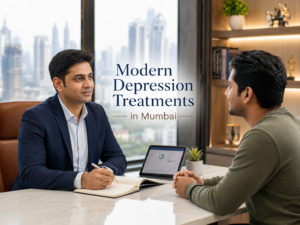
  • Comprehensive Guide on Modern Depression Treatments

    Psychiatrist In Mumbai Discussing Depression Treatment Details with a patient
    Psychiatrist Discussing Depression Treatment with Patient

    [Hook β€” start with a relatable scenario or statistic about mental health in Mumbai/India]

    What is [Topic]?

    [300 words β€” comprehensive definition, prevalence in India, why it matters]

    Types of [Topic]

    Type 1

    [Description]

    Type 2

    [Description]

    Type 3

    [Description]

    Symptoms to Watch For

    • Symptom 1
    • Symptom 2
    • Symptom 3
    • Symptom 4
    • Symptom 5

    Causes & Risk Factors

    [200 words]

    How is it Diagnosed?

    [150 words β€” what happens in a psychiatric evaluation]

    Treatment Options

    Psychotherapy

    [CBT, DBT, IPT β€” explain each briefly]

    Medication

    [Types of medication, reassure about non-addiction]

    Lifestyle & Self-Care

    [Sleep, exercise, diet, mindfulness]

    Living with [Topic] in Mumbai

    [100 words β€” challenges specific to Mumbai lifestyle, fast pace, commute stress]

    How Dr. Pavan Sonar Can Help

    With 22+ years of experience, Dr. Pavan Sonar (DNB, DPM Psychiatry) has helped thousands of patients across Mumbai manage and recover from [topic]. His approach combines evidence-based treatment with compassion and confidentiality.

    πŸ“ž +91 85918 40141
    🌐 bestpsychiatristmumbai.com

    Frequently Asked Questions

    Q1?

    Answer 1

    Q2?

    Answer 2

    Q3?

    Answer 3

    Q4?

    Answer 4

    Q5?

    Answer 5

    Conclusion

    [Summary β€” 100 words β€” reinforce that help is available, early intervention matters, CTA to book]

  • What Is Depression? Causes, Symptoms & Treatment Options

    Depression is one of the most common yet misunderstood mental health conditions in the world. It affects millions of people across all age groups, backgrounds, and walks of life β€” including right here in Mumbai and across Maharashtra. Despite how widespread it is, many people continue to suffer in silence, either not recognising the signs or feeling too ashamed to seek help.

    In this blog, we break down what depression really is, what causes it, how to recognise its symptoms, and most importantly β€” how it is treated. If you or someone you love is struggling, understanding depression is the first step toward recovery.

    What Is Depression?

    Depression (also known as Major Depressive Disorder or MDD) is a serious medical condition that causes persistent feelings of sadness, emptiness, and loss of interest in activities that were once enjoyable. It is far more than just “feeling sad” or “having a bad day” β€” depression is a prolonged state that affects how a person thinks, feels, and functions in daily life.

    According to the World Health Organization (WHO), depression is a leading cause of disability worldwide. In India, studies suggest that over 56 million people suffer from depression, yet the majority do not receive any treatment due to stigma and lack of awareness.

    Types of Depression

    Depression is not a one-size-fits-all condition. It presents in several forms, each with distinct features:

    1. Major Depressive Disorder (MDD)

    The most common form, characterised by episodes of intense sadness, hopelessness, and loss of interest lasting two weeks or more. It significantly interferes with work, relationships, and everyday functioning.

    2. Persistent Depressive Disorder (Dysthymia)

    A chronic, low-grade form of depression that lasts for at least two years. Symptoms are less severe than MDD but can be equally disabling over time because they are so long-lasting.

    3. Bipolar Depression

    People with bipolar disorder experience episodes of depression alternating with periods of mania or elevated mood. Treating bipolar depression requires a different approach than treating standard MDD.

    4. Postpartum Depression

    Affecting many new mothers (and sometimes fathers) after childbirth, postpartum depression goes beyond the “baby blues.” It involves prolonged sadness, exhaustion, anxiety, and difficulty bonding with the newborn.

    5. Seasonal Affective Disorder (SAD)

    A type of depression linked to seasonal changes β€” most commonly occurring during winter months when sunlight exposure is reduced. While less common in tropical countries like India, it does occur.

    6. Psychotic Depression

    A severe form where depression is accompanied by psychotic symptoms such as hallucinations (hearing or seeing things that are not there) or delusions (false beliefs). This requires urgent psychiatric care.

    Common Causes of Depression

    Depression does not have a single cause β€” it typically results from a combination of biological, psychological, and social factors:

    • Brain chemistry imbalance: Disruptions in neurotransmitters like serotonin, dopamine, and norepinephrine play a key role in depressive disorders.
    • Genetics: A family history of depression increases the risk significantly. Depression can run in families, though it is not inevitable.
    • Trauma and life events: Loss of a loved one, divorce, job loss, financial stress, abuse, or childhood trauma can trigger depressive episodes.
    • Chronic illness: Conditions like diabetes, heart disease, thyroid disorders, and chronic pain are closely linked to depression.
    • Substance abuse: Alcohol and drug misuse can both trigger and worsen depression.
    • Hormonal changes: Significant hormonal shifts during puberty, pregnancy, postpartum, or menopause can contribute to depression.
    • Social isolation and loneliness: Lack of social support, loneliness, and strained relationships are major risk factors.

    Signs and Symptoms of Depression

    Recognising depression early is crucial for timely treatment. The symptoms can vary from person to person, but common signs include:

    Emotional Symptoms

    • Persistent sadness, emptiness, or hopelessness
    • Loss of interest or pleasure in activities once enjoyed (anhedonia)
    • Feelings of worthlessness or excessive guilt
    • Irritability, frustration, or restlessness
    • Difficulty concentrating, remembering, or making decisions
    • Thoughts of death or suicide

    Physical Symptoms

    • Persistent fatigue and low energy
    • Changes in sleep β€” insomnia or sleeping too much
    • Changes in appetite β€” eating too little or too much, leading to weight loss or gain
    • Unexplained aches, pains, or digestive problems
    • Slowed movement or speech

    Important: If symptoms persist for more than two weeks and interfere with daily life, it is essential to seek help from a qualified psychiatrist.

    How Is Depression Diagnosed?

    There is no blood test or scan that diagnoses depression. A trained psychiatrist diagnoses depression through a comprehensive clinical evaluation, which includes:

    • A detailed discussion of symptoms and their duration
    • Personal and family mental health history
    • Physical examination to rule out medical causes
    • Standardised questionnaires such as the PHQ-9 (Patient Health Questionnaire)

    Early diagnosis leads to earlier treatment and a significantly better outcome.

    How Is Depression Treated?

    The good news is that depression is highly treatable. With the right combination of treatments, the vast majority of people with depression significantly improve and go on to live fulfilling lives. Treatment is tailored to the individual and may include one or more of the following approaches:

    1. Medications (Antidepressants)

    Antidepressant medications are often the first line of treatment for moderate to severe depression. They work by balancing brain chemicals involved in mood regulation. Common classes include:

    • SSRIs (Selective Serotonin Reuptake Inhibitors): Such as fluoxetine, sertraline, and escitalopram β€” the most commonly prescribed antidepressants, known for their effectiveness and relatively mild side effect profile.
    • SNRIs (Serotonin-Norepinephrine Reuptake Inhibitors): Such as venlafaxine and duloxetine β€” particularly effective for depression accompanied by anxiety or chronic pain.
    • TCAs (Tricyclic Antidepressants) and MAOIs: Older classes of antidepressants, used when newer medications are not effective.

    Medications typically take 2 to 6 weeks to show full effect. It is vital never to stop medication abruptly β€” always consult your psychiatrist before making any changes.

    2. Psychotherapy (Talk Therapy)

    Psychotherapy β€” often used alongside medication β€” is one of the most effective treatments for depression. The most evidence-based forms include:

    • Cognitive Behavioural Therapy (CBT): Helps identify and change negative thought patterns and behaviours that fuel depression. CBT is one of the most researched and effective therapies for depression.
    • Interpersonal Therapy (IPT): Focuses on improving relationships and communication patterns, particularly useful when depression is linked to grief, conflict, or life transitions.
    • Behavioural Activation Therapy: Encourages re-engagement with enjoyable and meaningful activities to counteract the withdrawal that depression causes.
    • Mindfulness-Based Cognitive Therapy (MBCT): Combines mindfulness practices with cognitive therapy techniques, particularly effective for preventing relapse in recurrent depression.

    3. Lifestyle Changes

    Lifestyle modifications play a powerful supporting role in managing and recovering from depression:

    • Regular physical exercise: Even 30 minutes of moderate exercise most days has been shown to reduce depressive symptoms significantly by releasing endorphins and promoting neuroplasticity.
    • Healthy sleep habits: Maintaining a regular sleep schedule, avoiding screens before bed, and creating a restful sleep environment.
    • Balanced nutrition: A diet rich in whole grains, fruits, vegetables, lean protein, and omega-3 fatty acids supports brain health and mood stability.
    • Social connection: Staying connected with supportive family and friends, joining support groups, or even volunteering can reduce feelings of isolation.
    • Avoiding alcohol and drugs: Substance use worsens depression and interferes with treatment.

    4. Electroconvulsive Therapy (ECT)

    ECT is a safe, highly effective medical treatment for severe, treatment-resistant depression β€” particularly when rapid improvement is needed (e.g., when there is a risk of suicide or the person cannot eat or care for themselves). Modern ECT is performed under general anaesthesia and is very different from its historical portrayal. It remains one of the most effective treatments available for severe depression.

    5. Transcranial Magnetic Stimulation (TMS)

    TMS is a non-invasive procedure that uses magnetic fields to stimulate nerve cells in the brain. It is used for treatment-resistant depression when medications and therapy have not been effective. TMS does not require anaesthesia and has a good safety profile.

    6. Hospitalisation or Intensive Care

    In cases where depression is severe and there is a risk of self-harm or suicide, inpatient psychiatric care may be recommended. This provides a safe, structured environment where intensive treatment can be administered.

    Depression Is Treatable β€” You Don’t Have to Suffer Alone

    One of the most important things to understand about depression is that it is not a sign of weakness. It is not something you can simply “snap out of” or “think your way through.” Depression is a medical condition β€” just like diabetes or hypertension β€” and it requires proper medical treatment.

    With timely intervention, the right medication, appropriate therapy, and a supportive environment, the vast majority of people with depression recover and go on to lead healthy, productive, and happy lives.

    When to See a Psychiatrist in Mumbai

    You should seek professional help if you or someone you know:

    • Has been feeling persistently sad, empty, or hopeless for more than two weeks
    • Has lost interest in activities they once enjoyed
    • Is struggling to function at work, school, or in relationships
    • Is having thoughts of self-harm or suicide
    • Is using alcohol or substances to cope with their emotions

    Dr. Pavan Sonar is a leading psychiatrist in Mumbai with over 22 years of experience treating depression, anxiety, bipolar disorder, and a wide range of other mental health conditions. With clinics across Borivali West, Malad West, Andheri West, and Malad East, expert psychiatric care is accessible across Mumbai.

    Don’t wait. If you or a loved one is struggling with depression, book a consultation today and take the first step toward a healthier, happier life.

  • Cost of Psychiatrist & Therapy in Mumbai 2025 β€” Complete Fee Guide

    Cost of Psychiatrist & Therapy in Mumbai 2025 β€” Complete Fee Guide

    One of the most common questions from people considering mental health support in Mumbai is: “How much does it cost?” The answer depends on the type of specialist, their experience, the location and whether you opt for in-person or online consultation. This comprehensive guide breaks down the cost of all mental health services in Mumbai so you can plan and budget effectively.

    Psychiatrist Consultation Fees in Mumbai (2025)

    Type of ConsultationFee Range (Rs.)Duration
    First / comprehensive psychiatric assessmentRs.1,200 – Rs.3,50045–60 min
    Follow-up psychiatrist consultationRs.600 – Rs.1,80020–30 min
    Online psychiatrist consultationRs.500 – Rs.2,00030–45 min
    Child psychiatry assessmentRs.1,500 – Rs.4,00060–90 min
    Addiction psychiatry consultationRs.1,200 – Rs.3,00045–60 min

    Psychologist & Therapist Fees in Mumbai (2025)

    Type of TherapyFee Range (Rs.)Duration
    Individual CBT / DBT sessionRs.1,000 – Rs.3,50050–60 min
    Online therapy sessionRs.800 – Rs.2,50050–60 min
    Couples / marriage therapy sessionRs.2,000 – Rs.5,00060–90 min
    Child therapy sessionRs.1,200 – Rs.3,50045–60 min
    EMDR therapy sessionRs.2,500 – Rs.5,00060–90 min
    Group therapy sessionRs.500 – Rs.1,50090 min

    Does Health Insurance Cover Psychiatry in India?

    Yes β€” under the Mental Healthcare Act, 2017, health insurance companies in India are legally required to cover mental health conditions on the same basis as physical health conditions. This includes coverage for psychiatric consultations, hospitalisation, and some outpatient treatment. Check your specific policy β€” many CGHS beneficiaries and corporate employees have psychiatric coverage. Ask your insurer about pre-authorisation requirements for mental health claims.

    Affordable Mental Health Options in Mumbai

    • Government hospital psychiatry departments β€” KEM, Nair, LTMG (Sion) and J.J. Hospital offer outpatient psychiatry at very low cost (nominal registration fee)
    • iCall (TISS Mumbai) β€” free counselling for those who cannot afford private fees
    • Online consultations β€” typically 20–30% more affordable than in-person
    • Group therapy β€” significantly more affordable than individual sessions; effective for social anxiety, bereavement and stress
    • Sliding scale fees β€” many private practitioners offer reduced rates for students and those with financial difficulties β€” always ask

    Is Mental Health Treatment Worth the Investment?

    Research consistently shows that mental health treatment delivers significant return on investment β€” in restored productivity, improved relationships, reduced physical health complications and overall quality of life. The cost of untreated depression or anxiety β€” in lost work days, impaired decision-making, physical health consequences and relationship breakdown β€” far exceeds the cost of a course of therapy or psychiatric treatment.

  • Online Therapy vs In-Person Therapy in India β€” Which is Better for You?

    Online Therapy vs In-Person Therapy in India β€” Which is Better for You?

    Online mental health care has transformed how psychiatry and therapy are delivered across India. Since 2020, millions of Indians have experienced therapy and psychiatry via video call for the first time β€” and many have chosen to continue with it even after the pandemic. But is online therapy really as good as in-person? This evidence-based guide helps you decide which is right for your situation.

    The Evidence: Is Online Therapy Effective?

    Yes β€” extensively. Over 100 randomised controlled trials now confirm that online CBT, online therapy and online psychiatry are equally effective as in-person care for the vast majority of conditions. This includes depression, anxiety disorders, panic disorder, OCD, PTSD, insomnia, relationship issues and workplace stress. Outcomes, dropout rates and patient satisfaction are comparable between formats. The evidence base for online therapy is now unambiguous.

    Advantages of Online Therapy and Psychiatry in India

    • Accessibility β€” access the best Mumbai psychiatrists from Nashik, Nagpur, Aurangabad or any Maharashtra district with internet
    • Privacy β€” no risk of being seen entering a clinic; no commute through your neighbourhood
    • Convenience β€” no Mumbai traffic, no parking, no time off work beyond the appointment itself
    • Cost β€” typically 20–30% less than in-person; no travel costs
    • Consistency β€” easier to maintain regular appointments without the barrier of travel
    • Comfort β€” being in your own familiar environment can make opening up easier

    When In-Person Therapy is Preferable

    • Severe psychiatric conditions requiring physical examination (schizophrenia, mania)
    • First-time psychiatric assessment where medication decisions need to be made
    • Situations where physical observation is clinically important (e.g. eating disorders, severe self-harm)
    • Children younger than 8 β€” play therapy and direct observation are more effective in person
    • Patients without privacy at home (living in joint families with no quiet space)
    • Patients who are not comfortable with technology

    A Hybrid Approach Works Best for Many Mumbai Patients

    Many of our patients find a hybrid model works best: first appointment in-person for a comprehensive assessment, then ongoing therapy or medication follow-up via video call. This combines the thoroughness of face-to-face assessment with the convenience of online follow-up. At our clinic, we offer both formats and make it easy to switch between them as your needs change.

  • Antidepressants in India β€” 8 Myths Busted by a Mumbai Psychiatrist

    Antidepressants in India β€” 8 Myths Busted by a Mumbai Psychiatrist

    Antidepressants are among the most effective treatments for depression, anxiety disorders, OCD and several other mental health conditions. Yet in India β€” and particularly in Mumbai β€” they are surrounded by myths, misinformation and fear that prevent many people from taking medication that could dramatically improve their quality of life. Here, our Mumbai psychiatrists debunk the most common myths about antidepressants.

    Myth 1: “Antidepressants are addictive”

    Fact: Modern antidepressants (SSRIs and SNRIs β€” the most commonly prescribed class) are not addictive. They do not cause cravings, do not require escalating doses, and do not produce euphoria. Some people experience discontinuation symptoms if they stop suddenly (dizziness, flu-like feelings) β€” but this is managed by tapering the dose slowly under medical supervision and is not the same as addiction.

    Myth 2: “Once you start, you’re on them forever”

    Fact: Most people with a first episode of depression take antidepressants for 6–12 months and then successfully taper off. The decision to continue longer depends on the number of previous episodes, severity, and personal circumstances β€” and is always a collaborative decision between patient and psychiatrist. Many patients use antidepressants for a defined period to stabilise, alongside CBT, and then come off them.

    Myth 3: “They change your personality”

    Fact: Antidepressants do not change who you are β€” they relieve the symptoms of depression or anxiety, allowing your authentic self to emerge. Many patients describe feeling “like themselves again” after starting medication. If you feel emotionally blunted or unlike yourself, discuss this with your psychiatrist β€” the dose or medication can be adjusted.

    Myth 4: “They’re just a crutch β€” you should fight depression naturally”

    Fact: You would not tell a diabetic to manage their blood sugar “naturally” without insulin. Depression involves real neurobiological changes β€” in serotonin, dopamine, neuroplasticity and brain structure. For moderate to severe depression, antidepressants may be medically necessary to restore the neurochemical balance needed for therapy to work effectively.

    Myth 5: “Antidepressants don’t work”

    Fact: For moderate to severe depression, antidepressants are significantly more effective than placebo. Meta-analyses covering 500+ trials show SSRIs reduce depressive symptoms by 50% or more in the majority of patients. Finding the right medication can take time (2–4 weeks to see effects, sometimes requiring adjustments), but they are effective for most people.

    Myth 6: “They’ll make me feel like a zombie”

    Fact: Older antidepressants (tricyclics) had more sedating effects. Modern SSRIs and SNRIs are much better tolerated. Some people do experience initial tiredness in the first 1–2 weeks, but this usually settles. If sedation persists, dose adjustment or a different medication usually resolves it.

    Myth 7: “I can stop whenever I want”

    Fact: Never stop antidepressants abruptly without medical guidance. Sudden cessation can cause discontinuation syndrome (dizziness, electric shock sensations, nausea, anxiety). Always taper under your psychiatrist’s supervision, which makes this completely manageable.

    Myth 8: “Taking antidepressants means I’m weak”

    Fact: Taking antidepressants means you are treating a medical condition appropriately. It requires courage to seek help and strength to commit to treatment. There is no weakness in treating depression any more than in treating pneumonia with antibiotics. In fact, untreated depression β€” not treatment β€” impairs functioning and strength.

  • ADHD in Adults in India β€” Signs, Diagnosis & Treatment in Mumbai

    ADHD in Adults in India β€” Signs, Diagnosis & Treatment in Mumbai

    Adult ADHD (Attention Deficit Hyperactivity Disorder) is one of the most under-diagnosed conditions in India. While ADHD is increasingly recognised in children, many adults in Mumbai continue to struggle for years β€” with career difficulties, relationship problems, chronic disorganisation and low self-esteem β€” without ever receiving a diagnosis. This guide covers the signs of adult ADHD in the Indian context, and how to get properly diagnosed and treated in Mumbai.

    Why Adult ADHD is Missed in India

    ADHD awareness in India remains lower than in Western countries. Many adults with ADHD were high-achieving children who compensated through intelligence, hard work or family support β€” their ADHD only becoming apparent when adult demands (university, career, parenthood) exceeded their compensatory strategies. Additionally, the hyperactive presentation of ADHD is more obvious and more commonly diagnosed; the inattentive subtype β€” particularly common in women β€” is frequently missed.

    Signs of Adult ADHD β€” The Mumbai Professional’s Experience

    • Chronic lateness β€” perpetually underestimating how long tasks take; frequently late for meetings despite trying
    • Difficulty starting tasks β€” procrastinating on important work until the deadline creates enough urgency to act
    • Hyperfocus β€” paradoxically, spending hours intensely absorbed in interesting tasks while unable to focus on boring ones
    • Disorganisation β€” losing keys, phones, documents; cluttered workspace despite wanting to be organised
    • Emotional dysregulation β€” intense frustration, impatience or emotional reactions disproportionate to the trigger
    • Poor working memory β€” forgetting what was said mid-conversation; losing train of thought
    • Multiple unfinished projects β€” excited by new ideas but rarely completing them
    • Relationship difficulties β€” partners frustrated by forgetfulness, interrupting, not listening

    How is Adult ADHD Diagnosed in Mumbai?

    A proper ADHD assessment in Mumbai involves a comprehensive clinical interview with a psychiatrist or clinical psychologist; standardised ADHD rating scales (such as the Adult ADHD Self-Report Scale, Conners Adult ADHD Rating Scales); review of childhood symptoms (ADHD begins in childhood, even if not diagnosed then); ruling out other conditions that mimic ADHD (anxiety, depression, sleep disorders, thyroid issues). The assessment typically takes 60–90 minutes. If available, a brief report from a partner or parent about observed behaviour is helpful.

    ADHD Treatment for Adults in Mumbai

    • Medication β€” methylphenidate (Ritalin) is the most commonly prescribed first-line medication for ADHD in India; atomoxetine is an alternative for those who cannot tolerate stimulants. Medication is prescribed by a psychiatrist.
    • CBT for ADHD β€” targeting organisation, time management, emotional regulation, procrastination and self-esteem
    • ADHD coaching β€” practical, action-focused support for daily functioning
    • Mindfulness training β€” improving attention and reducing impulsivity
  • What is CBT Therapy? How Cognitive Behavioural Therapy Works in Mumbai

    What is CBT Therapy? How Cognitive Behavioural Therapy Works in Mumbai

    Cognitive Behavioural Therapy (CBT) is the most scientifically researched psychological treatment in the world β€” and for good reason. Developed in the 1960s by Dr Aaron Beck, CBT has been proven effective for depression, anxiety, OCD, phobias, PTSD, eating disorders, insomnia and many other conditions through thousands of clinical trials. This guide explains exactly what CBT is, how it works, and what to expect from CBT therapy in Mumbai.

    The Core Idea Behind CBT

    CBT is based on a simple but powerful insight: how we think affects how we feel, and how we feel affects what we do. This interconnection between thoughts, feelings and behaviours is called the cognitive model. When we have distorted or unhelpful thought patterns (“cognitive distortions”), they lead to negative emotions and unhelpful behaviours β€” which in turn reinforce the negative thoughts, creating a vicious cycle.

    CBT breaks this cycle by helping you identify and challenge unhelpful thoughts, and by changing the behaviours that maintain distress.

    Common Cognitive Distortions Addressed in CBT

    • All-or-nothing thinking β€” “If I’m not perfect, I’m a complete failure”
    • Catastrophising β€” “This headache must be a brain tumour”
    • Mind reading β€” “They didn’t reply β€” they must hate me”
    • Emotional reasoning β€” “I feel like a failure, so I must be one”
    • Fortune telling β€” “The presentation will go badly, I know it”
    • Personalisation β€” “My friend is in a bad mood β€” it must be my fault”

    What Happens in a CBT Session in Mumbai?

    CBT sessions in Mumbai are typically 50–60 minutes and are structured and goal-focused. A typical course runs 12–20 weekly sessions, though shorter courses (6–8 sessions) are effective for specific phobias. Here is what to expect:

    • Session 1–2: Assessment β€” your therapist understands your background, current difficulties and goals for therapy
    • Session 3–4: Psychoeducation β€” learning about the CBT model and how your specific condition works
    • Session 5–12: Core CBT techniques β€” identifying automatic negative thoughts, thought records, behavioural experiments and exposure (if relevant)
    • Final sessions: Consolidating gains, creating a relapse prevention plan, preparing for the future

    Does CBT Really Work? The Evidence

    CBT has been tested in more randomised controlled trials than any other psychological therapy. Key findings: CBT is as effective as antidepressants for mild to moderate depression and significantly reduces relapse compared to medication alone. CBT is the first-line treatment for panic disorder (80–90% success rate), OCD (ERP, a form of CBT, reduces symptoms by 50–70%), social anxiety (60–80% clinically significant improvement) and specific phobias (often resolved in 1–5 sessions of exposure therapy).

    Is CBT Available Online in Mumbai?

    Yes β€” online CBT delivered via video call is just as effective as in-person CBT for the vast majority of conditions. This means patients anywhere in Maharashtra can access our Mumbai-based CBT therapists without travel. Online CBT is particularly helpful for people with social anxiety, agoraphobia, or busy schedules.